A DEFINING MOMENT
Pearl Harbor, 7 December 1941
In June 1940, President Roosevelt transferred the United States Fleet to Pearl Harbor as a deterrent to Japanese aggression. The Japanese military needed oil and other raw materials to continue the war it had started against China in mid-1937. A Pacific war became virtually inevitable after July 1941, when the Western powers halted trade with Japan and the Japanese prepared to seize the oil and mineral-rich East Indies and Southeast Asia. By late November 1941, with peace negotiations ending, informed U.S. officials expected a Japanese attack into the Indies, Malaya, and probably the Philippines.
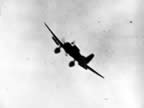
In early December, the Japanese Navy sent an aircraft carrier force across the Pacific to attack Pearl Harbor; the carrier force had more aerial striking power than had ever been seen on the World's oceans. The planes attacked just before 0800 hours. They sunk five of eight battleships at Pearl Harbor and damaged the rest.
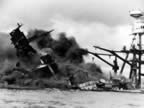
Most Hawaii-based combat planes were also knocked out and over 2400 Americans were dead. Japanese planes virtually eliminated the American air force in the Philippines, a Japanese Army was ashore in Malaya, the U.S. Navy had been mortally wounded in Hawaii, and there was genuine fear that Japan would attack the U.S. West Coast soon thereafter. The unanticipated Japanese raid on Pearl Harbor became a defining moment in U.S. history.
The attack and subsequent Japanese successes shocked and enraged the previously divided American people, creating a level, purposeful unity hardly seen before or since in the American polity. Under normal political circumstances, an accommodation might have been considered. However, the memory of the "sneak attack" on Pearl Harbor fueled a determination to fight, and stoked a resolve to stop Japan’s conquests and remove her, and her European allies, as future threats to World peace.

Pearl Harbor Remembrance by Jim Walsh
I was five and a half that Sunday 68 years ago. I don't know how much I remember
versus how much I was told, but here is a quick summary of that day as I now
recall. My Dad
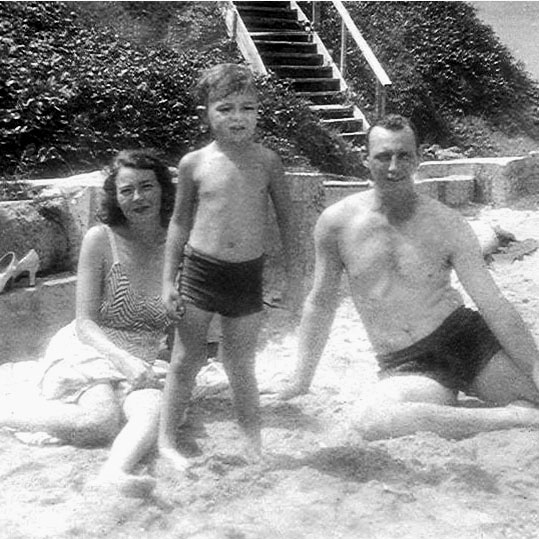
was a Captain and commanded an Engineer Company at Fort Buchanan, which was just outside San Juan, Puerto Rico. We lived in San Juan in a 3rd floor apartment. On Sundays, we traditionally went to early morning Mass, and then to the beach. There were two Military Recreation Area beaches - one run by the Army about a 30-minute drive, and the other by the Navy on Roosevelt Roads U.S. Naval Station, an hour away. The Army one was smaller and just had a snack bar, while the Navy beach was close to the Officer's Club, which had a full scale brunch. On December 7th, 1941 we were at the Navy facility. After brunch, we had gathered on the beach and I was swimming. I swam out to a raft some yards out, past the breaking surf and was resting on it. Around 3:30 PM (9:30 AM Hawaiian time) my Mom and Dad started waving and shouting at me to come in. I did, and was told about the attack and with that, our lives were changed forever.
27 JANUARY 1941 PERUVIAN AGENT RIVERA-SCHREIBÉR WARNS DOS OF PENDING JAPANESE
ASSAULT ON PEARL HARBOR
20 FEBRUARY 1941 1ST TRANSPORT OF JEWS TO CONCENTRATION CAMPS LEAVE PLOTSK
POLAND
Pearl Harbor Remembrance by Bill Mullen
 I was almost four years old
at the time of Pearl Harbor. My father was assigned to the 35th Infantry,
Schofield Barracks, Territory of Hawaii. Schofield Barracks was the setting much
of the unit activity depicted in the movie “From Here to Eternity.” I remember
one of the inter-regiment boxing matches so vividly described by James Jones in
his book and later by Hollywood. In 1941 Dad, then a captain, coached the Cacti,
the 35th Infantry Regimental Football Team. I was a mascot; I even had a number
on my little football uniform, something like “1 and 5/8.” Our quarters were at
Schofield Barracks. The family consisted of Dad, Mom, my younger brother Mike,
and me. (Mike, USMA ’63, and I would both command brigades in the 1st Infantry
Division during the ‘80s.) Dad reported to his unit. Mom drove Mike and me into
the hills near Schofield Barracks. Military policemen in a motorcycle with side
car came along and told her she would have to move the car. She had selected a
camouflaged ammunition storage area of some sort as her personal dispersal area.
We spent that night along with other families in a school building. We soon
returned to our quarters. My parents must have kept external events from
disturbing family life. I don’t recall any details of those days other than that
the house’s windows were painted black. Later, I realized that was as an air
raid precaution. Mom, Mike, and I were evacuated to the United States in
January, 1942. Later that year, the 25th Infantry Division deployed to
Guadalcanal where Dad commanded the 3d Battalion of the 35th Infantry.I was
almost four years old at the time of Pearl Harbor. My father was assigned to the
35th Infantry, Schofield Barracks, Territory of Hawaii. Schofield Barracks was
the setting much of the unit activity depicted in the movie “From Here to
Eternity.” I remember one of the inter-regiment boxing matches so vividly
described by James Jones in his book and later by Hollywood. In 1941 Dad, then a
captain, coached the Cacti, the 35th Infantry Regimental Football Team. I was a
mascot; I even had a number on my little football uniform, something like “1 and
5/8.” Our quarters were at Schofield Barracks. The family consisted of Dad, Mom,
my younger brother Mike, and me. (Mike, USMA ’63, and I would both command
brigades in the 1st Infantry Division during the ‘80s.) Dad reported to his
unit. Mom drove Mike and me into the hills near Schofield Barracks. Military
policemen in a motorcycle with side car came along and told her she would have
to move the car. She had selected a camouflaged ammunition storage area of some
sort as her personal dispersal area. We spent that night along with other
families in a school building. We soon returned to our quarters. My parents must
have kept external events from disturbing family life. I don’t recall any
details of those days other than that the house’s windows were painted black.
Later, I realized that was as an air raid precaution. Mom, Mike, and I were
evacuated to the United States in January, 1942. Later that year, the 25th
Infantry Division deployed to Guadalcanal where Dad commanded the 3d Battalion
of the 35th Infantry.I was almost four years old at the time of Pearl Harbor. My
father was assigned to the 35th Infantry, Schofield Barracks, Territory of
Hawaii. Schofield Barracks was the setting much of the unit activity depicted in
the movie “From Here to Eternity.” I remember one of the inter-regiment boxing
matches so vividly described by James Jones in his book and later by Hollywood.
In 1941 Dad, then a captain, coached the Cacti, the 35th Infantry Regimental
Football Team. I was a mascot; I even had a number on my little football
uniform, something like “1 and 5/8.” Our quarters were at Schofield Barracks.
The family consisted of Dad, Mom, my younger brother Mike, and me. (Mike, USMA
’63, and I would both command brigades in the 1st Infantry Division during the
‘80s.) Dad reported to his unit. Mom drove Mike and me into the hills near
Schofield Barracks. Military policemen in a motorcycle with side car came along
and told her she would have to move the car. She had selected a camouflaged
ammunition storage area of some sort as her personal dispersal area. We spent
that night along with other families in a school building. We soon returned to
our quarters. My parents must have kept external events from disturbing family
life. I don’t recall any details of those days other than that the house’s
windows were painted black. Later, I realized that was as an air raid
precaution. Mom, Mike, and I were evacuated to the United States in January,
1942. Later that year, the 25th Infantry Division deployed to Guadalcanal where
Dad commanded the 3d Battalion of the 35th Infantry.
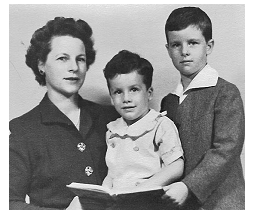
I was almost four years old
at the time of Pearl Harbor. My father was assigned to the 35th Infantry,
Schofield Barracks, Territory of Hawaii. Schofield Barracks was the setting much
of the unit activity depicted in the movie “From Here to Eternity.” I remember
one of the inter-regiment boxing matches so vividly described by James Jones in
his book and later by Hollywood. In 1941 Dad, then a captain, coached the Cacti,
the 35th Infantry Regimental Football Team. I was a mascot; I even had a number
on my little football uniform, something like “1 and 5/8.” Our quarters were at
Schofield Barracks. The family consisted of Dad, Mom, my younger brother Mike,
and me. (Mike, USMA ’63, and I would both command brigades in the 1st Infantry
Division during the ‘80s.) Dad reported to his unit. Mom drove Mike and me into
the hills near Schofield Barracks. Military policemen in a motorcycle with side
car came along and told her she would have to move the car. She had selected a
camouflaged ammunition storage area of some sort as her personal dispersal area.
We spent that night along with other families in a school building. We soon
returned to our quarters. My parents must have kept external events from
disturbing family life. I don’t recall any details of those days other than that
the house’s windows were painted black. Later, I realized that was as an air
raid precaution. Mom, Mike, and I were evacuated to the United States in
January, 1942. Later that year, the 25th Infantry Division deployed to
Guadalcanal where Dad commanded the 3d Battalion of the 35th Infantry.I was
almost four years old at the time of Pearl Harbor. My father was assigned to the
35th Infantry, Schofield Barracks, Territory of Hawaii. Schofield Barracks was
the setting much of the unit activity depicted in the movie “From Here to
Eternity.” I remember one of the inter-regiment boxing matches so vividly
described by James Jones in his book and later by Hollywood. In 1941 Dad, then a
captain, coached the Cacti, the 35th Infantry Regimental Football Team. I was a
mascot; I even had a number on my little football uniform, something like “1 and
5/8.” Our quarters were at Schofield Barracks. The family consisted of Dad, Mom,
my younger brother Mike, and me. (Mike, USMA ’63, and I would both command
brigades in the 1st Infantry Division during the ‘80s.) Dad reported to his
unit. Mom drove Mike and me into the hills near Schofield Barracks. Military
policemen in a motorcycle with side car came along and told her she would have
to move the car. She had selected a camouflaged ammunition storage area of some
sort as her personal dispersal area. We spent that night along with other
families in a school building. We soon returned to our quarters. My parents must
have kept external events from disturbing family life. I don’t recall any
details of those days other than that the house’s windows were painted black.
Later, I realized that was as an air raid precaution. Mom, Mike, and I were
evacuated to the United States in January, 1942. Later that year, the 25th
Infantry Division deployed to Guadalcanal where Dad commanded the 3d Battalion
of the 35th Infantry.I was almost four years old at the time of Pearl Harbor. My
father was assigned to the 35th Infantry, Schofield Barracks, Territory of
Hawaii. Schofield Barracks was the setting much of the unit activity depicted in
the movie “From Here to Eternity.” I remember one of the inter-regiment boxing
matches so vividly described by James Jones in his book and later by Hollywood.
In 1941 Dad, then a captain, coached the Cacti, the 35th Infantry Regimental
Football Team. I was a mascot; I even had a number on my little football
uniform, something like “1 and 5/8.” Our quarters were at Schofield Barracks.
The family consisted of Dad, Mom, my younger brother Mike, and me. (Mike, USMA
’63, and I would both command brigades in the 1st Infantry Division during the
‘80s.) Dad reported to his unit. Mom drove Mike and me into the hills near
Schofield Barracks. Military policemen in a motorcycle with side car came along
and told her she would have to move the car. She had selected a camouflaged
ammunition storage area of some sort as her personal dispersal area. We spent
that night along with other families in a school building. We soon returned to
our quarters. My parents must have kept external events from disturbing family
life. I don’t recall any details of those days other than that the house’s
windows were painted black. Later, I realized that was as an air raid
precaution. Mom, Mike, and I were evacuated to the United States in January,
1942. Later that year, the 25th Infantry Division deployed to Guadalcanal where
Dad commanded the 3d Battalion of the 35th Infantry.
Pearl Harbor Remembrance by Tom Roberts
I was born at the dispensary at Schofield Barracks where my father commanded a
company of the 19th Infantry in 1937. We were, however, long gone to
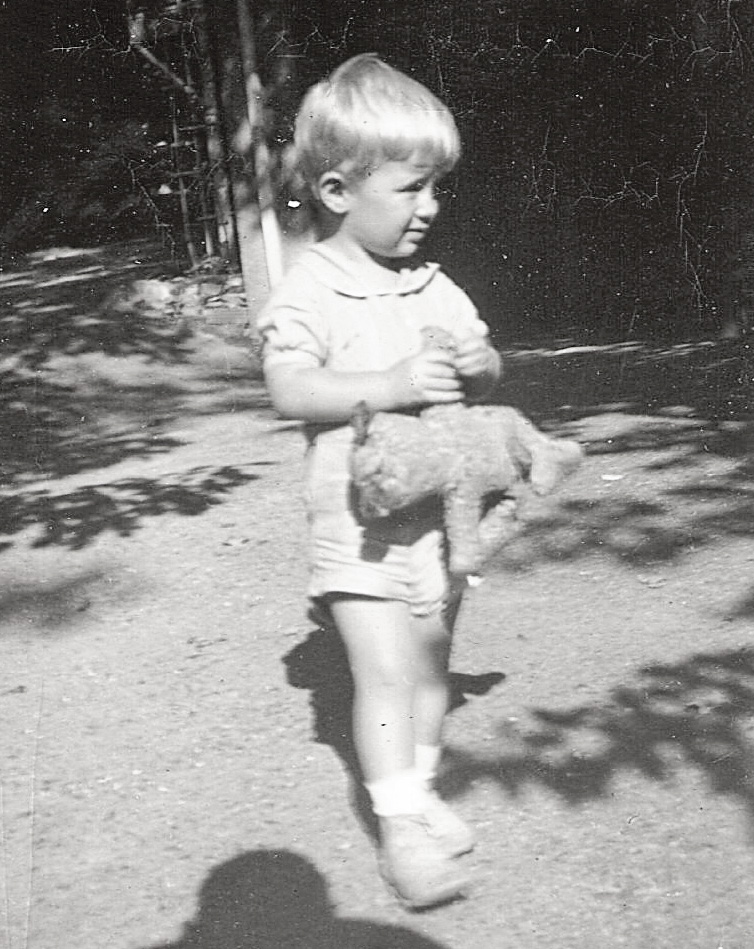
Fort Meade, MD well before 1941. My father had been sent to a course at Ft Leavenworth on a TDY basis. The family had accompanied him, and on 7 Dec 41 we were returning by auto to Ft Meade. At 4 years of age, my recollection is somewhat sketchy, but I do recall that we had stopped to refuel at midday. When my father returned to the car, he told us that there had been a radio report, according to the gas station cashier, that Pearl Harbor had been attacked. In my life, as in many others, this marked the beginning of the very turbulent years of WWII and the immediate aftermath. This was my first "defining moment."
20 MAY 1941 ENGLISH ARMY ENTERS BAGHDAD, CHASING PRO-GERMAN COUP GOVERNMENT
27 JULY 1941 JAPANESE FORCES LAND IN INDO-CHINA
Pearl Harbor Remembrance by Court Prisk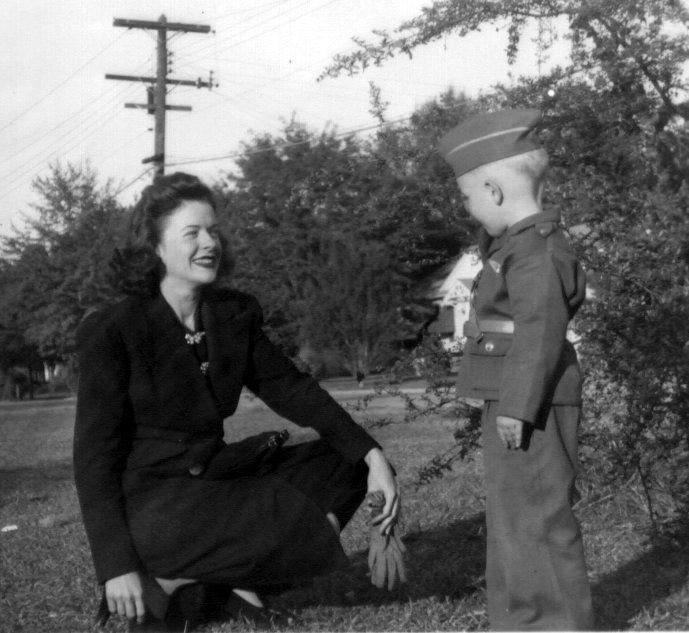
7 December 1941, in Bremerton, Washington, provided one of my first indelible memories. My mom had just finished putting on my suit coat in preparation for going to church when my Uncle Jack, a Navy Lieutenant in Uniform, and my aunt, came rushing up to the door. My aunt was crying. Immediately my Dad and Uncle started a serious discussion. I remember my mother asking the operator for my Grandfather’s telephone, and then saying, “The Japs have attacked and destroyed Hawaii and might attack Bremerton (Naval Shipyard).” I asked who were the Japs and was told they were bad people who wanted to hurt me. I was then told to change my clothes and go out to play. To this day, I’m not sure whether the affect the news of Japanese attack on the grownups, learning that the Japs wanted to hurt me, or my not having to go church made the memory indelible. My dad, a Captain in the Army Reserves, departed for Fort Benning in January 1942
Pearl Harbor Remembrance by Ted Colby
I was safely at home in Vermont at the time, but it seems that my wife, Mary was there in Pearl at the time of the attack on Dec 7th. Her father, LCDR Gene Lindsey was stationed on the USS Enterprise. Later, he commanded Torpedo Squadron 6 off the Enterprise. On June 4th, 1942, although suffering from injuries received the prior day when his plane crashed attempting a landing, he took the Squadron out to attack the Japanese fleet at Midway and was lost at sea., for which action he was awarded the Navy Cross, Distinguished Flying Cross, and the Purple Heart. Mary’s stepfather, VADM (then CDR) Joe Grenfell, had just left Pearl commanding the USS Gudgeon, an attack submarine, to head north when he got notification of the attack. He returned to Pearl, reloaded, and was the first sub to go out on a combat mission. Results: the first Japanese tonnage of the war. Later, he was to get the most Japanese tonnage of the war and was eventually awarded the Navy Cross, and the Silver Star. Mary was only two and a half at the time, and so doesn't remember much about the attack, but her older brother, Gene stood on the garage roof and cheered the planes on...hoping they would bomb the school. Well, you just had to know Gene, a graduate of USNA '58, and a submariner.
Pearl Harbor Remembrance by Lou Sullenberger
I was five and a half years old when the attack on Pearl Harbor took place. I
remember joining thousands of people at the pier in Long Beach, CA. Everyone was
apprehensively gazing toward Hawaii. What did they expect to see? Were they
seeking an answer? Were they paying their respects? Were they displaying their
solidarity? All I know is that it was pretty scary for a little boy.
14 AUGUST 1941 ATLANTIC CHARTER SIGNED BY FDR & CHURCHILL
11 SEPTEMBER 1941 FDR ORDERS ANY AXIS SHIP FOUND IN AMERICAN WATERS BE SHOT ON
SIGHT
Pearl Harbor Remembrance by Sandy Beach
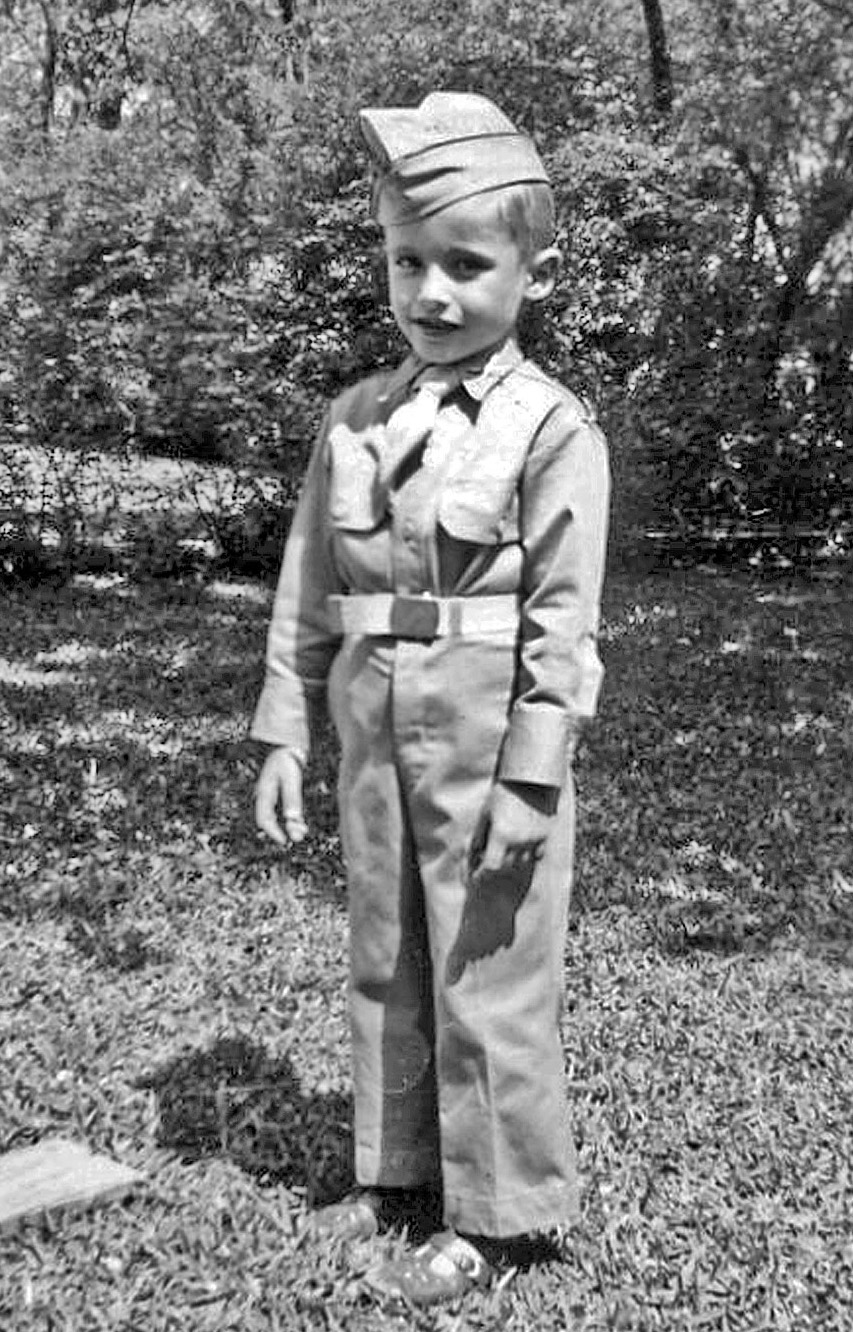
Boy, do I remember Pearl Harbor! The response to it was America ’s finest hour. My story of 7 Dec 1941 begins at Fort Clayton in the Canal Zone, where my father commanded a pack artillery battery. I was four and a half. After the Pearl Harbor attack the Army conducted air raid warnings regularly with sirens, dirigibles held by guy wires, search lights, etc., all during the night. During practice air attacks, all dependents were made to hide in the bathtub under a mattress. Dependents were soon evacuated via troop ship across the German submarine infested Gulf of Mexico, and my mother took the four of us to San Antonio for the duration of the war. My dad’s kid brother, 1LT Kenneth Otto Beach , an ROTC LT of Infantry, had shipped out for the Philippines in June of 1941. He survived the Bataan Death March and the starvation of three years of captivity. He was destined to die of wounds when his unmarked Japanese prisoner ship was bombed by a US Navy aircraft in January of 1945 in the South China Sea. Kenny is memorialized at Herbert Hall. MacArthur said he needed an officer experienced in pack artillery for his forces in Australia . Dad volunteered, trained and commanded such a battalion, 167th FA Bn, 41st Infantry Division, through five amphibious landings. Rest in peace, Kenny and Dad.